Almost every Google Ads account we inherit in Egypt is broken in one of two directions. Either it is a single campaign holding four hundred keywords and one budget, or it is forty campaigns copied from a template someone found online, each one starved of data. Both fail for the same reason. Smart bidding needs a meaningful number of conversions inside each unit before it can do anything intelligent, and an account split too finely never gets there.
Structure is not a matter of taste. It is arithmetic done on your own conversion volume.
Let the volume decide the structure
The old advice about one keyword per ad group belongs to a manual bidding era that no longer exists. The working rule now is simpler. No campaign should exist unless it can produce roughly thirty conversions a month on its own. If the whole account generates sixty leads a month, you get two campaigns, not eight. If it generates six hundred, you can afford to separate by product line, by city and by language.
Brand search is the one permanent exception. Split it out even at tiny volume. It is cheap, it stops competitors renting your name, and leaving it mixed into everything else inflates the account average until nobody can see what prospecting actually costs. We report brand and non brand as two separate lines on every account, and the gap between them is usually the most useful number in the deck.
Google Ads in Egypt: the four campaign account most SMEs should run
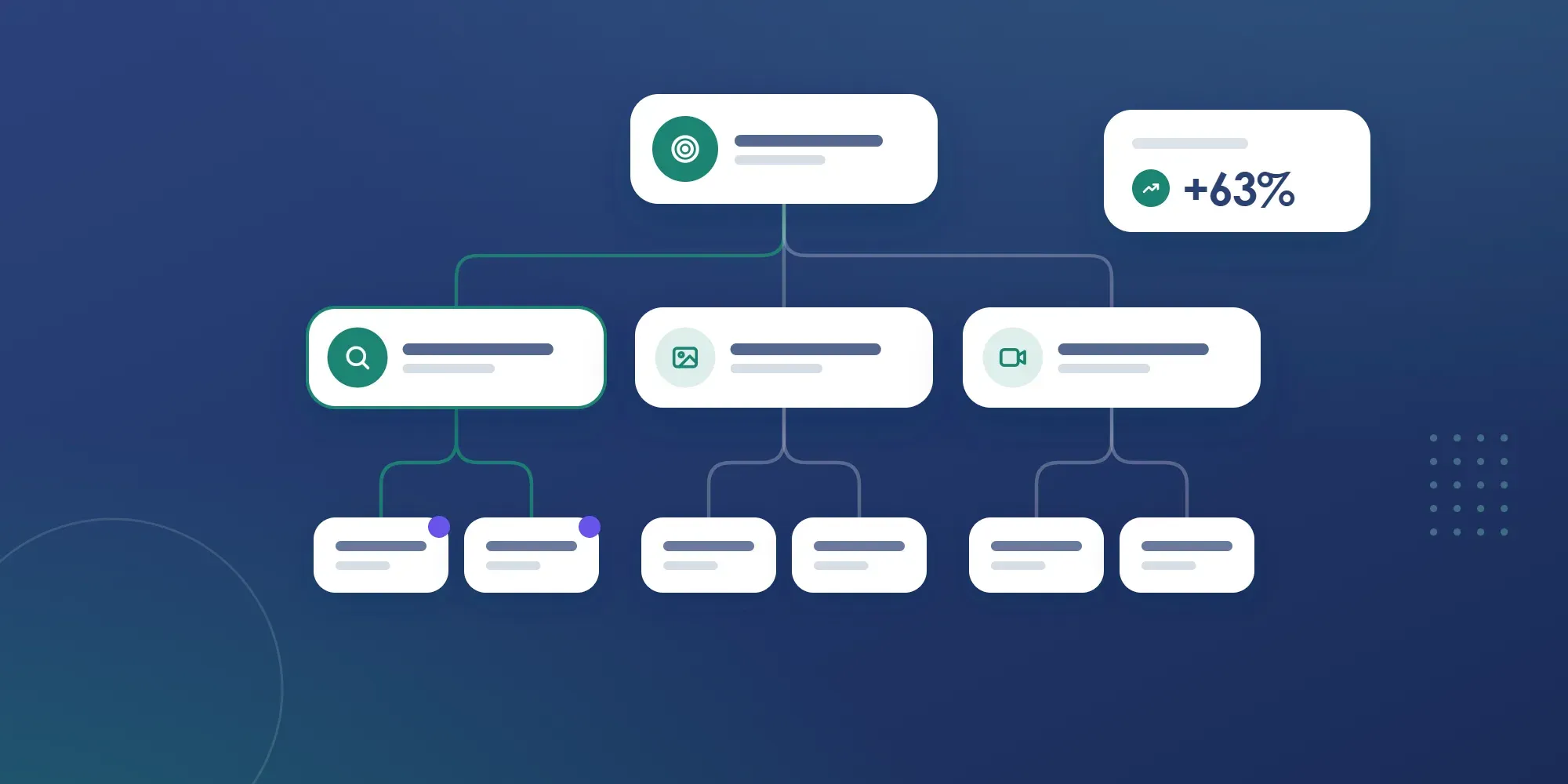
Brand search. Non brand search with two to four ad groups themed by intent rather than by keyword. A shopping or Performance Max campaign if there is a real product feed. And one tightly capped remarketing campaign. That is the whole account until volume justifies more. Everything else is decoration.
The bilingual question comes up on every call. Our position is that Arabic and English belong in the same campaign in separate ad groups, not in separate campaigns. Arabic query volume in most Egyptian categories is not large enough to feed a campaign of its own, and splitting it starves both halves. Write the Arabic ads properly rather than translating the English ones, and remember that a large share of Egyptian searchers type Arabic words in Latin letters. Those Franco Arabic spellings belong in the keyword list, and the ones you do not want belong in the negatives.
The settings that quietly drain an Egyptian budget
Four defaults cost new clients more money than any bidding mistake. Search partners and display expansion are switched on the moment a search campaign is created, and on Egyptian accounts they reliably deliver cheap traffic that never converts. Turn both off until the core campaign is profitable.
Location targeting defaults to people in, regularly in, or who have shown interest in your locations. For a Cairo business that setting quietly buys clicks from Gulf residents researching Egypt. Set it to presence only. Third, confirm the account currency and time zone were set to Egyptian pounds and Cairo time when the account was created, because neither can be changed afterwards and a mismatched account makes every budget conversation harder than it needs to be.
Fourth, negatives. A shared negative list carrying employment terms in both languages, plus free, download, PDF and course where they do not apply, is the highest return twenty minutes available in the account. Search volume for job related phrasing overlaps with commercial phrasing here far more than most advertisers expect.
Feed it the outcome, not the click
None of this works if the only thing the account can see is a form submission. Push the real outcome back in: which leads the sales team qualified, which orders were delivered rather than merely placed, and what each one was worth. Accounts that send back qualified value instead of raw counts get better at finding buyers within a few weeks, and they stop optimizing towards the cheapest possible bad lead.
Getting that loop closed is usually the first month of work on a new account, and it is where our paid media advertising and planning team starts before touching a single bid.