Most Egyptian service businesses treat the contact form as a formality. It sits at the bottom of a page, asks for nine pieces of information, and drops an email into an inbox somebody opens after lunch. Then the owner concludes that the website does not generate leads while the phone rings all day. The website is not underperforming. It is asking buyers to do something they have no interest in doing.
Inquiry and booking flows need three fields, and the right three
Every field costs you submissions, and the expensive ones are the fields people find intrusive or tedious. A first inquiry needs a name, a phone number and one line about what the person wants. Company size, budget range, how they heard about you and a dropdown with twelve service categories can all wait for the conversation you are trying to start.
Get the phone field right, because it breaks more often than anything else on the page. Egyptian mobile numbers begin 010, 011, 012 and 015, and validation copied from an international template regularly rejects them or demands a country code the visitor does not think to add. Accept the number the way people write it, clean it on the server, and never make somebody argue with a form to hand you their contact details.
Demote email. Plenty of customers here will give a phone number happily and are far more reluctant to hand an address to a business they do not know yet. Make it optional and put a click to chat button beside the form, because a good share of your buyers would rather start on WhatsApp than fill anything in. In our accounts chat inquiries close at a higher rate than form inquiries, and they close faster.
The reply is the product
You can spend a month improving the form and gain a few percent. Cutting response time from four hours to fifteen minutes will beat every design change available to you. Somebody who just submitted a form is comparing you against two or three other businesses in the same hour, and whoever answers first usually wins by default.
So build for the reply. Route inquiries to a phone as well as to an inbox. Set a response standard and staff it during the hours people actually browse, which in Egypt runs late into the evening and across the weekend. Send an immediate confirmation that names a person and says when they will hear back, because silence after a submission is what sends someone off to fill in the next form on the next site.
A booking beats a promise to call back
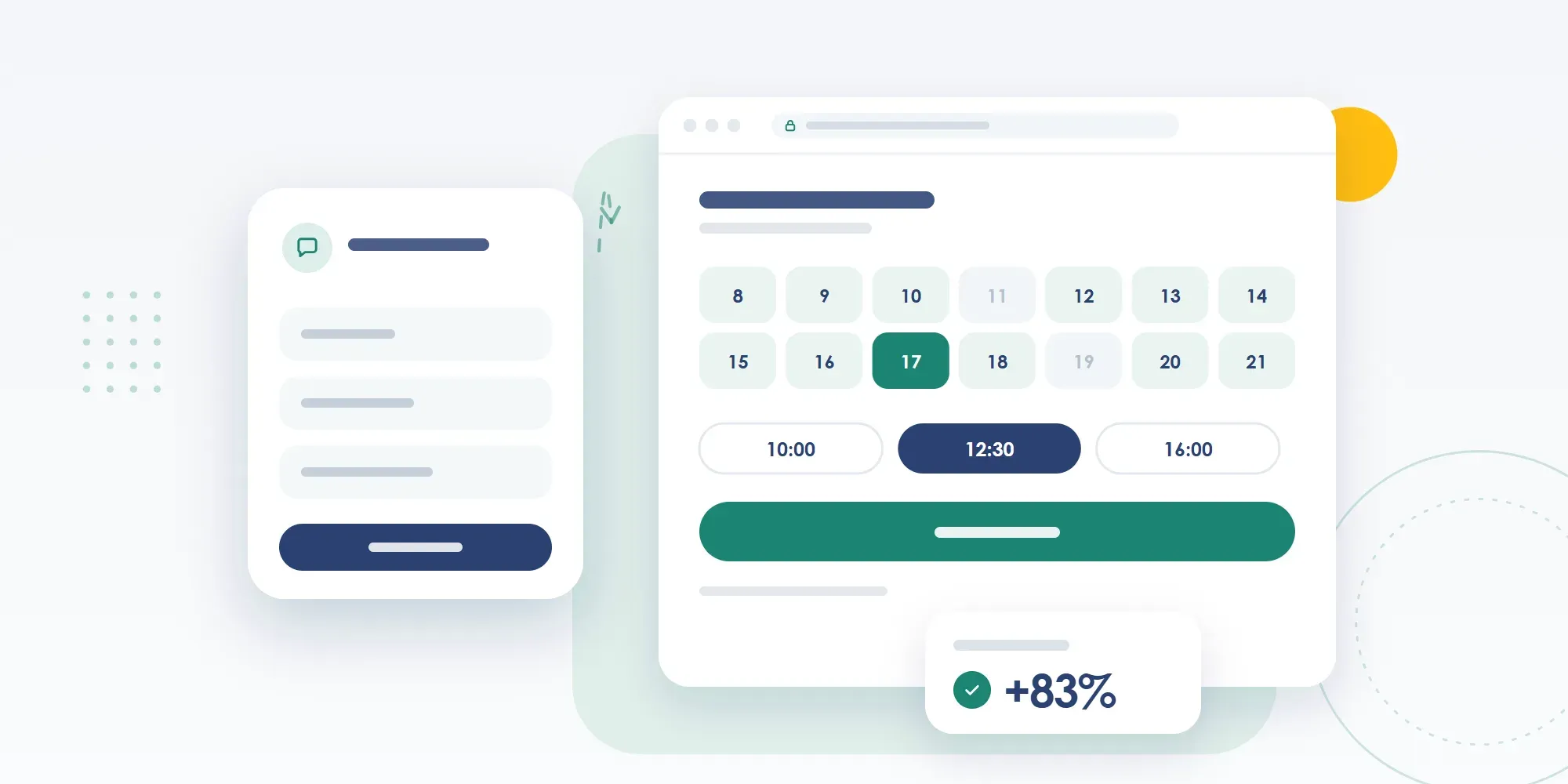
For anything with a schedule, a clinic, a salon, a workshop, a maintenance visit, showing real availability and letting the customer take a slot outperforms a callback promise by a wide margin. A callback is a request for trust from a stranger. A confirmed appointment is a decision the customer has already made and is now invested in.
Keep it to three steps. Confirm on WhatsApp or SMS rather than by email alone, and include an easy way to move the slot, because the alternative to rescheduling is a no show. If the operation genuinely cannot support live booking, commit to a call window and be accurate about it.
Finally, measure the flow rather than the page. Track form starts against completions so you can see the field people abandon on. Count the inquiries arriving through chat and through the phone number on the page, not only the ones that land in the inbox, because in this market the chat number is usually the larger one and it is almost never in the report. Building that plumbing, and the tracking underneath it, is standard scope on every project our website and app development team ships.