Walk into almost any Egyptian retail business and you will find a phone holding more revenue than the website. Orders, sizes, addresses, payment confirmations and complaints, all of it inside a WhatsApp thread that nobody backs up and no report ever sees. That is not a channel. That is a liability that happens to make money.
Step one for WhatsApp commerce in Egypt: get it out of a personal phone
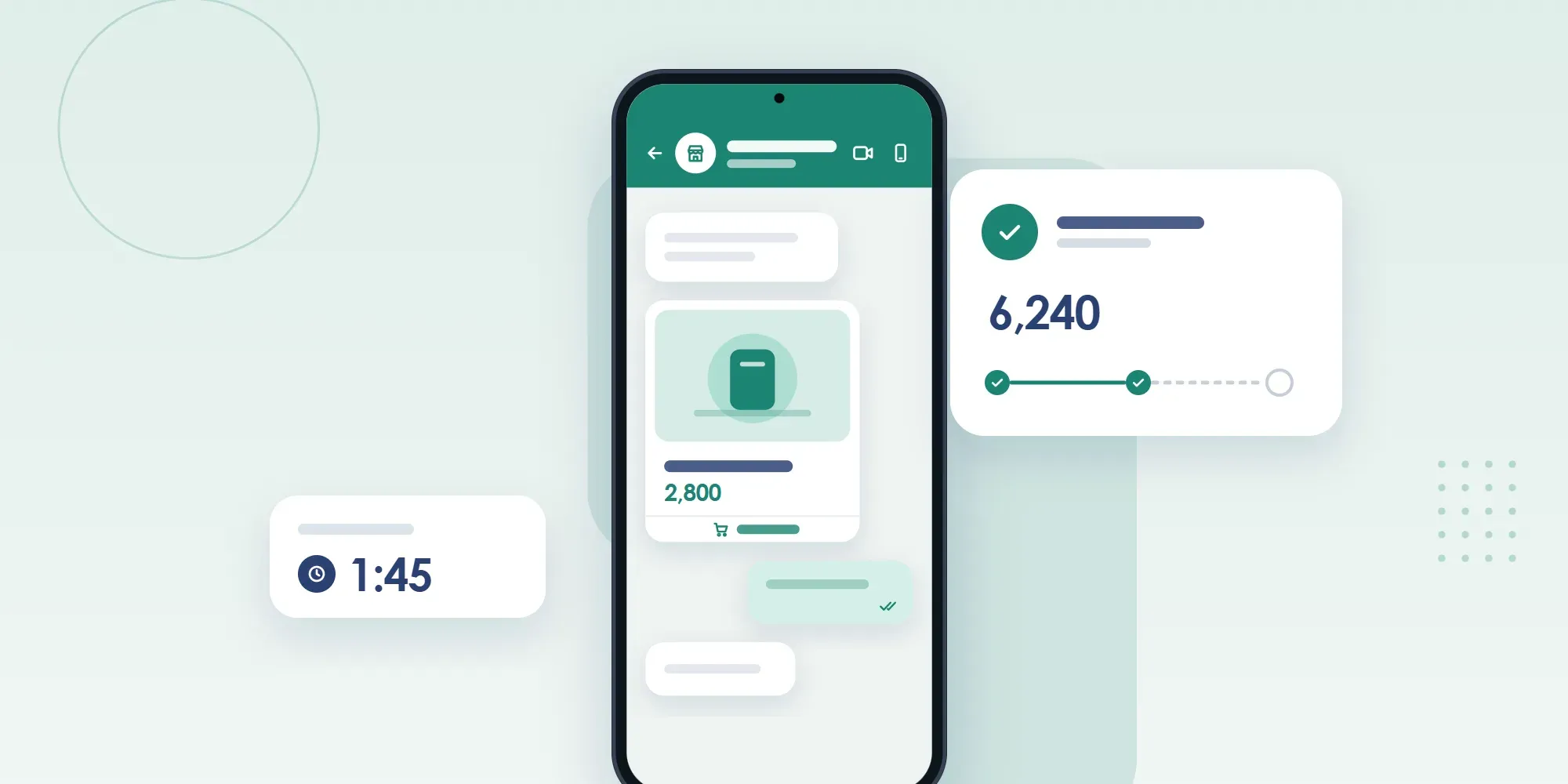
The first migration is always from a personal number to a proper business account with multiple agents, saved replies, labels and a catalog. Everything after this becomes possible only because it happened. Across the three clients we moved this year, average first response time fell from over four hours to under twelve minutes, and that single change lifted inquiry to order conversion by between 15 and 28 percent. Speed is most of the product in chat.
Step two: templates, not scripts
The instinct is to write a script and make agents follow it. Chat does not work that way, because customers arrive mid thought. What works is a set of reusable blocks: a greeting that asks the two questions you always need answered, a product card with price and availability, a delivery and payment explainer, and a post purchase check in. Agents assemble the blocks and write the connective tissue themselves, so the conversation stays human while the information stays consistent.
Attach a catalog and the thread stops being a negotiation about what exists. Attach payment links and the order stops depending on an agent remembering to follow up.
Step three: connect it to the systems that already run the business
This is where most projects stop, and where the value actually sits. A conversation that does not create a record is a sale you cannot repeat. Wiring chat into order management means the agent can see stock, the customer gets a real delivery window, and the marketing team can finally build audiences from people who bought rather than people who clicked.
One apparel client went from a shared phone to a connected setup over seven weeks. Chat sourced revenue went from invisible to 31 percent of tracked orders, which reset their whole media plan, because they had been optimizing against the wrong denominator all year.
Building that layer between chat, stock and the customer record is exactly the sort of work our ERP and CRM mobile apps practice handles. The conversation is already happening. The point is to stop losing it.