When Interaction to Next Paint replaced First Input Delay two years ago, a lot of sites that had been comfortably green went amber overnight. The reason is simple and unforgiving: the old metric measured how quickly the browser acknowledged your first tap, while INP measures how long the page actually takes to respond, across every interaction, for the whole visit. Marketing sites built on stacked third party scripts had nowhere to hide.
The four things that fix most INP failures
One, audit your tag manager. On the average site we inherit, the container holds between 20 and 40 tags and roughly a third fire on pages where nobody uses the data. Every one of them competes for the main thread the moment a user taps something. Deleting dead tags is the cheapest performance work in existence.
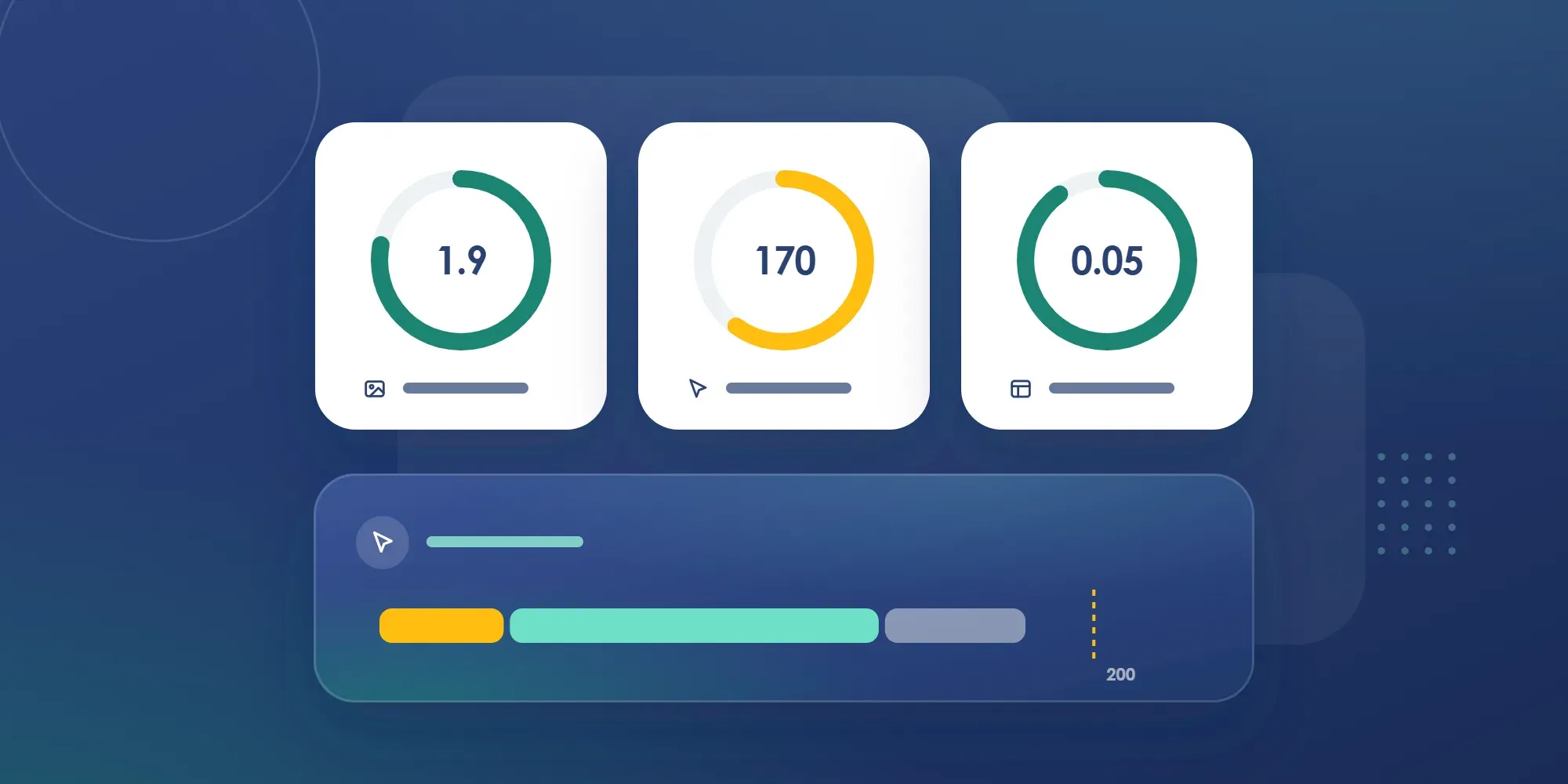
Two, break up long tasks. Anything running more than 50 milliseconds on the main thread blocks the response to a tap. Splitting hydration, deferring non critical work and yielding between chunks usually moves a page from 400 milliseconds to under 200 without touching the design.
Three, stop animating layout. Animate transform and opacity, never width, height or top. Four, load images with explicit dimensions and modern formats, because layout shift is still the metric that quietly ruins mobile conversion rates while your desktop scores look perfect.
Core Web Vitals are judged on field data, not lab scores
Lab scores are a diagnostic, not a grade. Google ranks on field data from real visits, which means your slowest third of users on mid range Android phones over a congested network decide your score, not your MacBook on office fiber. We hold client sites to a 75th percentile INP under 200 milliseconds and Largest Contentful Paint under 2.5 seconds on mobile field data. Anything else is a story we are telling ourselves.
Speed is a revenue lever, not a badge
The ranking benefit of good vitals is real but modest. The conversion benefit is not modest at all. On one e-commerce client this quarter, cutting mobile INP from 480 to 170 milliseconds lifted checkout completion by 11 percent with no other change. That is the argument to take into a budget meeting.
If your site is fighting its own template rather than a few loose scripts, a rebuild usually costs less than three more years of patching. That is the work our website and app development team does: fast by construction, not by cleanup. The OIS property portal is a good example: every filter queries a real listing field, so results come back before a buyer loses patience.