Social media gives you attention, but you do not own it. A personal brand website is the one place you control. It turns a follower into a client. Founders and coaches often cram everything into it or say too little. Here is what it needs, in the order a visitor needs it.
Lead with your story
People buy from people they understand. Your story should answer three questions fast: who you are, who you help and why you do it. Keep it human and specific. A real moment from your path explains more than a list of titles. Do not open with your biography. Open with the visitor's problem, then show why you understand it.
Put a short version at the top of the home page, next to a clear photo of you. Give the long version its own page. Visitors who want depth will find it. Everyone else gets the point in seconds.
Make your offers easy to compare
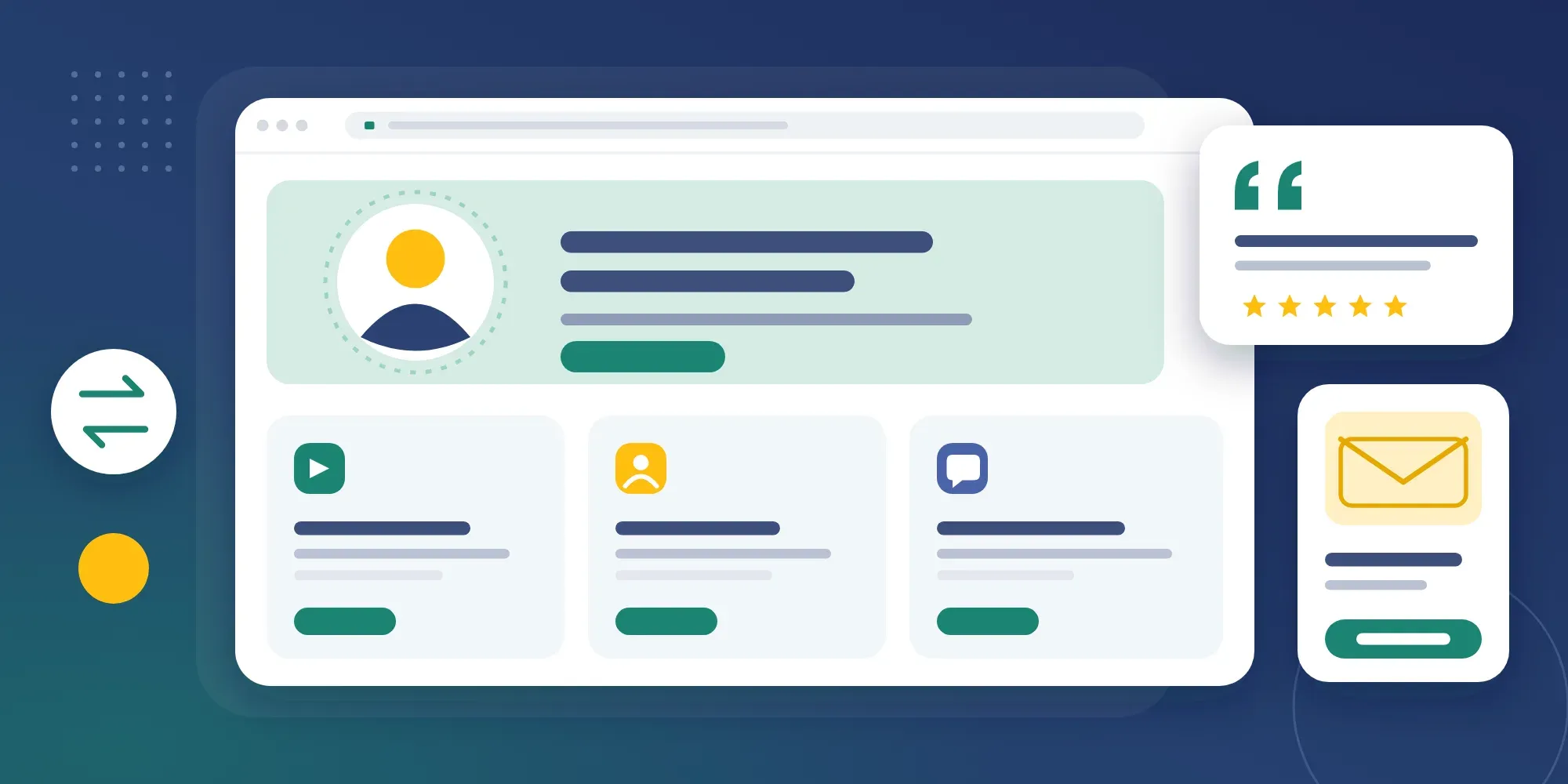
Most personal sites hide what the person actually sells. Show your offers as separate cards: a course, a coaching programme, a community or a service. Each card should state who it is for, what changes for them and what the next step is.
Avoid a long menu of vague options. A visitor with too many choices picks none. Lead with your main offer and place the others beneath it. Give each page one clear action, such as booking a call or joining a list.
The site for Rahma Daigham follows this pattern. Courses, one to one coaching and a women-only community each have a clear place, with a member login for paid content.
Show proof, not only claims
Anyone can say they are great at their work. Proof makes it believable. Use real client comments, short case stories, logos of brands you have worked with and examples of your output. Ask permission before you publish any client name. Place proof beside the offer it supports. A comment about coaching belongs next to the coaching card, not on a distant page.
Describe what changed for people, in plain words. Avoid invented numbers. If you cannot prove a figure, leave it out. Honest detail persuades more than big promises, and Google's guidance on helpful, people-first content says the same.
Add a lead magnet to your personal brand website
Most visitors are not ready to buy on a first visit. A lead magnet gives them a reason to stay in touch. It can be a short guide, a checklist, a template or a recorded lesson. It must solve one small problem well. Name it by the result it gives, not by its format. "A checklist for your first week" beats "a free PDF".
Place the sign-up form where interest is high: after your story, inside articles and at the end of the home page. Then follow up with a short email sequence that introduces your offers. Make sure every sign-up lands in a system you own, such as a CRM, not in an inbox you forget.
Write for your audience in both languages
If your audience speaks Arabic and English, publish in both. Do not machine translate and hope. Write the Arabic version with the same care as the English one, and make the layout read right to left. Keep the two versions equal, with the same pages, the same offers and the same forms.
The Jozoor site shows how a brand with a founder at its heart can speak in both languages. Its message is story-led, its services are clear and its questions are answered in plain words. Our guide to Arabic RTL websites explains the technical side.
Keep it simple to maintain
A personal brand website only works if you update it. Choose a build where you can edit text, add articles and change offers without calling a developer. Plan one monthly review: check the links, refresh a testimonial and retire any offer you no longer sell. Add analytics too, so you can see which pages bring sign-ups.
Ready to plan yours? Start with our guide on how to write a website brief. Then see our website and app development page, or ask for a free audit of your current site.