Most companies own a logo. Far fewer own a brand. The difference shows up the first time a printer, a new designer or a sales rep has to make something without asking you. Clear brand guidelines answer those questions in advance, so every flyer, post and invoice looks like it came from the same company.
Why brand guidelines matter more than the logo
A logo is one decision. A brand is thousands of small ones, made by different people over years. Without a reference, each person fills the gaps with their own taste. Colours drift, fonts multiply and the Arabic version slowly stops matching the English one. Customers notice the inconsistency even when they cannot name it, and it quietly lowers trust.
Good guidelines are not a coffee table book. They are a working tool. If your team cannot find the right file in seconds, the guidelines exist only on paper.
What complete brand guidelines include
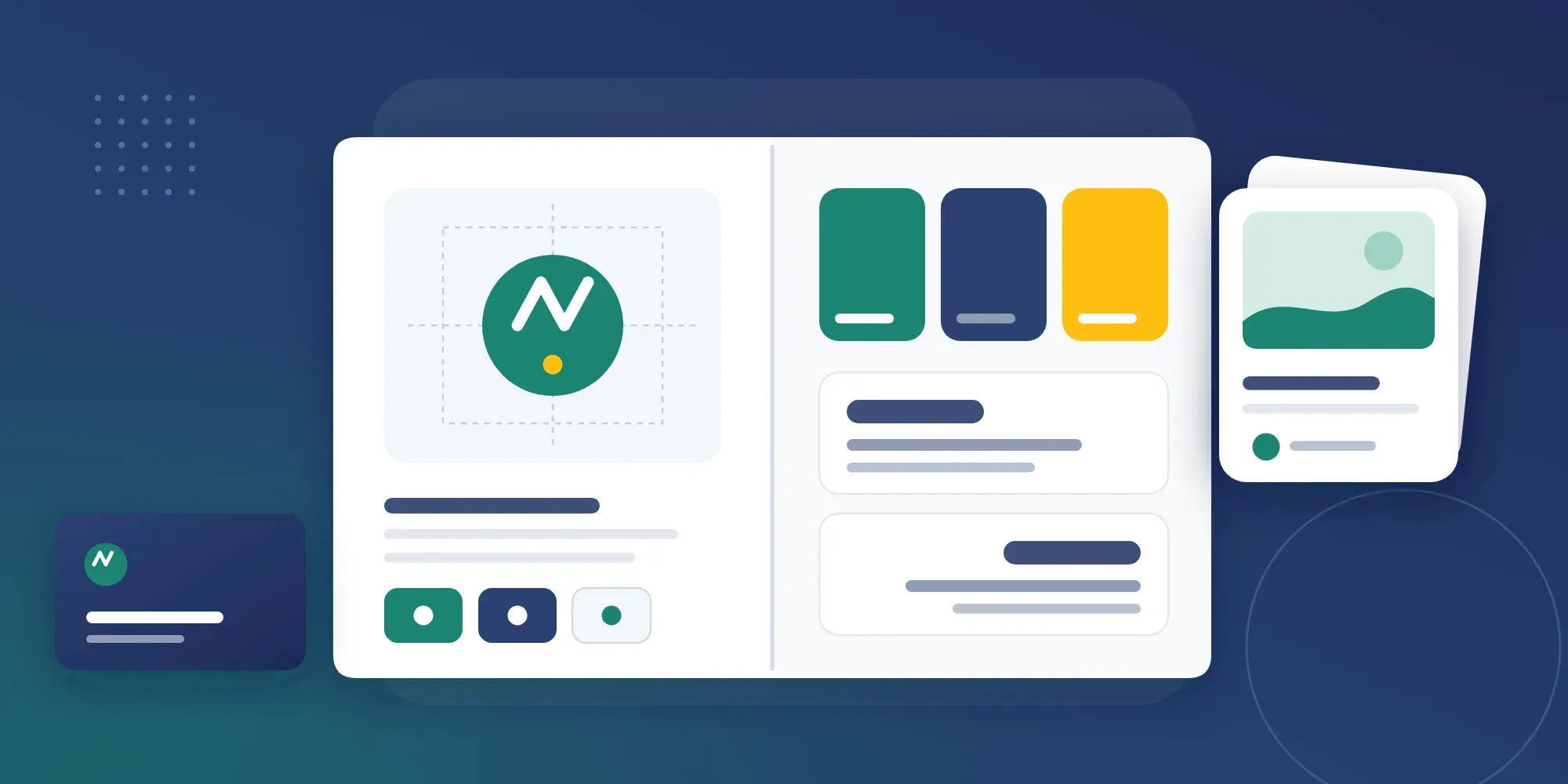
Logo rules. Show every approved version: full colour, single colour, reversed and the compact mark for small spaces. Set the clear space around it and the smallest size it may appear. Then show the common mistakes, such as stretching, recolouring or placing it on a busy photo.
Colour. List each colour with its values for screen and print. Say which colour leads and which ones support it. Include accessible text pairings that meet the contrast levels in the WCAG accessibility guidelines, so your website and social posts stay readable.
Typography in both scripts. Name the Arabic and Latin typefaces, the weights you use and how headings, body text and captions should look. Show how the two scripts sit together on one page. We cover this in depth in bilingual brand systems.
Imagery and icons. Describe the photo style you want, the kind of light, people and settings. Add the icon style and any illustration rules. A few good and bad examples teach more than a page of adjectives.
Tone of voice. Explain how the brand sounds in Arabic and in English. Is it formal or friendly? Short or detailed? Give sample headlines and replies for each language, because a direct translation rarely carries the same tone.
Ready templates. This is the part teams use every day. Provide social post templates, a presentation deck, letterheads, email signatures and a business card. Templates protect the brand better than any rule, because they make the right choice the easy one.
How to keep the kit in daily use
Store everything in one shared folder with clear names, and give suppliers a read only link. Assign one person to own the kit and approve new templates. When a new need appears, such as a trade show stand or a delivery bag, add it to the guidelines instead of letting someone improvise.
Review the kit once a year. Retire templates nobody uses and add the ones people keep asking for. If you are planning bigger changes, our guide to rebranding without losing recognition explains how to evolve without starting over.
Signs your brand needs a system
Your team sends the logo as a screenshot. The Arabic and English social accounts look like two different companies. Every new campaign starts with a debate about colours. If any of these sound familiar, the problem is rarely creativity. It is a missing system.
Our graphic design and brand identity team builds brand guidelines in Arabic and English, complete with the templates your team will actually open. If you are not sure where your brand stands, a free audit is a good place to start.